7 Instagram DM Workflows Every Business Should Use in 2026
In 2026, they function as sales funnels, support systems, and lead qualification engines—all inside a single conversation.
Yet most businesses still manage DMs reactively, replying one message at a time with no structure, no consistency, and no scalability.
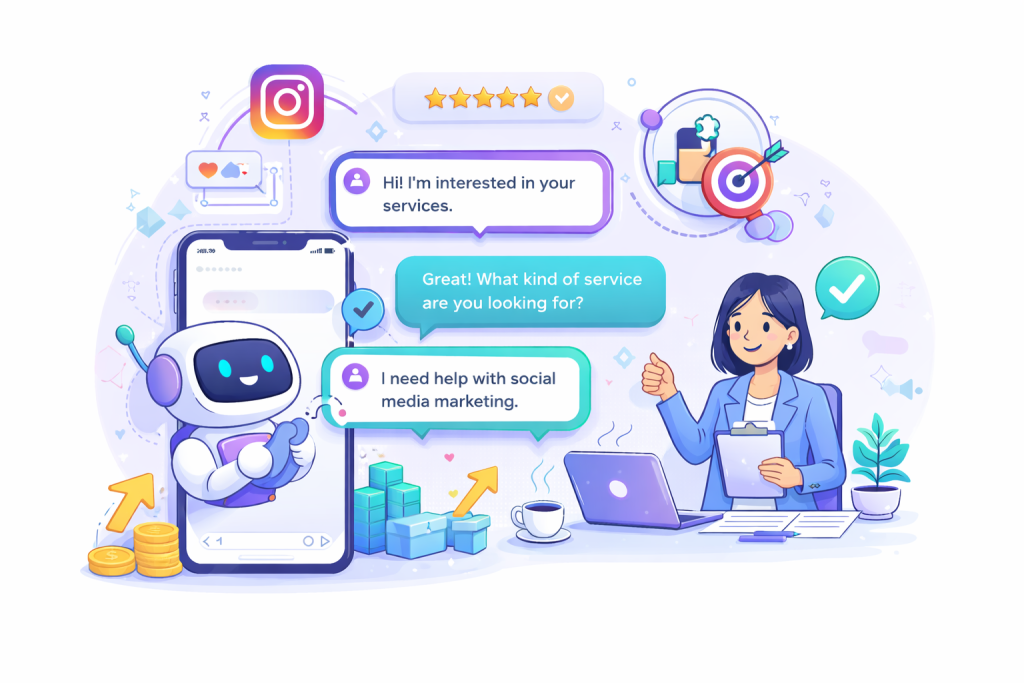
This guide introduces 7 proven Instagram DM workflows that modern businesses use to increase leads, improve customer experience, and scale conversations without adding manual workload.
1. Welcome DM Workflow (First-Contact Experience)
Purpose: Create a clear and professional first impression.
When someone sends a DM for the first time, delayed or generic replies often cause friction.
A strong welcome workflow:
- Responds instantly
- Sets expectations
- Guides the user to the next step
Best practice: Ask one simple question that moves the conversation forward.
Example:
“Thanks for reaching out. How can we help you today?”
2. Comment-to-DM Workflow (Intent Capture)
Purpose: Convert public engagement into private conversations.
Instagram comments often signal intent, but conversion rarely happens in the comment section itself.
This workflow automatically moves users from a comment into a direct message, where the conversation can continue privately and more effectively.
Key benefits:
- Faster response time
- Cleaner public comments
- Higher-quality leads
This is one of the most effective ways to turn organic engagement into measurable business results.

3. Lead Qualification Workflow (Without Forms)
Purpose: Identify serious prospects without sending users to external forms.
Instead of landing pages and long forms, lead qualification can happen directly inside the DM using progressive questions.
Recommended structure:
- Identify intent
- Identify need
- Identify readiness
Each response determines the next message, creating a natural and conversational experience.
This approach significantly reduces drop-off and improves lead quality.
4. Product or Service Discovery Workflow
Purpose: Help users find the right solution without overwhelming them.
Many businesses overwhelm users by sending too many links or long explanations.
A better approach is guided discovery using:
- Buttons
- Categories
- Short, structured options
This workflow mimics the behavior of an experienced salesperson—asking the right questions before presenting solutions.
5. Sales Follow-Up Workflow
Purpose: Re-engage interested users without manual chasing.
Not every conversation converts immediately.
A sales follow-up workflow:
- Reopens stalled conversations
- Adds value instead of pressure
- Maintains a professional tone
Timing and relevance matter more than frequency.
6. Customer Support & FAQ Workflow
Purpose: Improve response quality while reducing support load.
Most Instagram support questions are repetitive:
- Pricing
- Availability
- Access
- How-to questions
A structured DM support workflow ensures instant answers for common questions while routing complex issues correctly.
This improves customer experience and saves internal resources.
7. Re-Engagement Workflow (Dormant Conversations)
Purpose: Bring inactive conversations back to life.
Users often stop replying because they get distracted—not because they lose interest.
An effective re-engagement workflow:
- References the previous interaction
- Offers a simple next step
- Respects user intent
This workflow is especially effective for longer sales cycles and high-value services.
Why These Workflows Matter in 2026
Instagram growth today is not about sending more messages.
It is about sending the right message, at the right time, with the right structure.
Without workflows, conversations break, leads are lost, and teams burn out.
With structured workflows in place, businesses can scale communication while maintaining quality and consistency.
To implement these workflows efficiently, many brands rely on modern Instagram automation systems such as Instagram automation,which allow these processes to run reliably without manual overhead.
Conclusion
Instagram DMs have evolved into one of the most powerful business channels available today.
The difference between brands that struggle and brands that scale is not effort—it is structure.
By implementing these seven DM workflows, businesses can transform scattered conversations into a predictable system for lead generation, sales, and long-term customer relationships.